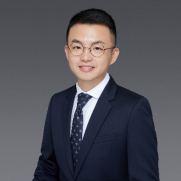
胡楠
个人简介
胡楠,男,博士,教授,博士生导师。2007年06月毕业于湖南大学土木工程专业,获学士学位;2010年05月毕业于中南大学桥梁与隧道工程专业,获硕士学位;2010年10月至2011年6月间在清华大学土木工程系冯鹏教授课题组担任科研助理;随后于2011年8月至2015年8月期间就读于美国密歇根州立大学(Michigan State University)土木与环境工程系,分别于2014年5月和2015年8月获工程力学硕士学位及土木工程博士学位。2015年8月至2017年6月间在美国达特茅斯学院(Dartmouth College)工程学院完成博士后工作;2017年9月至2019年12月期间,在美国俄亥俄州立大学(The Ohio State University),任预聘轨助理教授(Tenure-track Assistant Professor)。通过高层次人才引进计划,于2020年4月入职华南理工大学土木工程系,担任教授至今,目前担任土木与交通学院副院长(本科教学与国际交流),还负责智能建造专业规划建设,担任该校数字设计与智能建造未来实验室负责人,及广东省现代土木工程技术重点实验室副主任等职务。
胡教授主要从事交叉学科背景下面向新功能的材料结构设计、建造和表征,目前已在PNAS, Nature Communications,Advanced Materials,npj computational materials等高水平期刊参与发表SCI论文70余篇,谷歌引用2000+。求学期间参与完成包括NSF、NIH在内多项资助项目。自2017年开始独立PI科研生涯以来,已主持或参与包括国家自然科学基金项目等7项,目前指导博士生5人,硕士生7人。已完成指导博士后2人、博士毕业生1人,硕士毕业生8人。先后主讲结构力学、复合材料力学、材料力学、理论力学、建构化材料概论、结构找形等课程。先后担任包括Science在内30余个国际权威SCI期刊特约审稿人;曾获土木权威期刊 Engineering Structures 及Journal of Bridge Engineering优秀审稿人称号。目前是包括美国科学促进会(AAAS)、美国土木工程协会(ASCE)、国际空间与壳结构协会(IASS)等多个学术组织的成员。2017年至今担任ASCE结构工程分部(SEI)结构仿生(Bio-inspired Structure)分委会委员,以及工程力学分部(EMI)结构稳定(Stability)分委会委员、建构化材料(Architected Materials)分委会委员。
研究领域
材料强韧共生机制与功能协同设计;
力学超材料与模块化复合材料结构;
复杂结构的增减材设计建造一体化;
教育经历
2011年8月--2015年8月,美国密歇根州立大学(Michigan State University),土木工程专业,博士
2011年8月--2014年5月,美国密歇根州立大学(Michigan State University),工程力学专业,硕士
2007年9月--2010年5月,中南大学,桥梁与隧道工程专业,硕士
2003年9月--2007年6月,湖南大学,土木工程专业,学士
工作经历
2020年4月--至今,华南理工大学,土木与交通学院,土木工程系,教授
2022年12月--2023年12月,华南理工大学,土木工程系主任
2022年6月--2023年6月,华南理工大学,教务处副处长(挂职),分管教师发展和教学计划
2017年9月--2019年12月,美国俄亥俄州立大学(The Ohio State University),土木、环境与大地测量系,tenure-track助理教授
2015年8月--2017年6月,美国达特茅斯学院(Dartmouth College,常春藤盟校之一),Thayer工程学院,副研究员
科研项目情况
胡楠教授一直从事新材料结构设计、分析与力学相关研究,自2017年从教以来,先后主持国家自然科学基金青年项目在内6项。目前已在Nature Communications, PNAS, Matter, npj computational materials上参与发表SCI期刊论文70余篇(3篇高被引,3篇选为杂志封面,1篇选为封底,1篇选为创刊25年十佳综述文章)、会议论文25篇、书章节2篇、发明专利15件,应邀在国际学术会议上作报告十余次。谷歌引用2000+,H-index 20。
论文论著
- Yao, X., Liu, K., Dong, Q., Li, X., Ma, C., & Hu, N. (2024), Tunable and recoverable energy absorption of foam-embedded architected cellular composite material at multiple strain rates, Composites Structures, 329, 117745.
- Peng, S., Xie, B., Wang, Y. L., Wang, M., Chen, X., Ji, X., Zhao, C., Lu, G., Wang, D., Hao, R., Wang, M., Hu, N., He, H., Ding, Y., & Zheng, S. (2023), Low-grade wind driven directional flow in anchored droplets. The Proceedings of the National Academy of Sciences (PNAS), 120(38), e2303466120.
- Yu, C., Xie, B., Yao, X., Hu, N., Guo, J., Jiang X., Smith, A., & Sun, L. (2023). Cabbage-like flexible fluororubber/carbon aerogel hybrids with negative Poisson’s ratios and excellent microwave absorption, Matter. 12(6), 4321-4338.
- Huang, Z., Chen, Z., Xie, G., Hua, Y., Zhu, L., & Hu, N. (2023), Implementation of parametric modeling to design Miura origami-inspired canopy toward adaptive urban habitat. Architecture, Structures, and Construction.
- Chen, M., Yao, X., Zhu, L., Yin, M., Xiong, Y., & Hu, N. (2023), Geometric design and performance of single and dual-printed lattice-reinforced cementitious composite, Cement and Concrete Composites, 143, 105266.
- Xie, B., Li, X., Zhao, X., & Hu, N. (2023). Architected lattice-reinforced cementitious composite: from versatile local designs to tunable global behaviors, Composite Structures, 312,116850.
- Ye, X., Cao, Y., Liu, A., Wang, X., Zhao, Y., & Hu, N. (2023), Parallel convolutional neural network toward high-efficient and robust structural damage identification, Structural Health Monitoring, 22(6):3805-3826.
- Li, Z., Xie, C., Li, F., Wu, D., & Hu, N. (2023). Heterogeneous geometric designs in auxetic composites toward enhanced mechanical properties under complex loading, Composites Communications, 38, 101499.
- Yao, X., Chen, M., Zhao, J., Zhang. Y. & Hu, N. (2022), Tailoring plastic deformation of metallic architected materials toward multi-stage energy dissipations, Materials & Design, 223, 111262.
- Xie, B., Yao, X., Mao, W., Rafiei, M. & Hu, N. (2022), Harnessing domain-knowledge-guided self-supervised learning to characterize properties of concrete, Computational Material Sciences, 216, 111834.
- Liu, P., Mao, W., Yin, Y., Gan, Z., Zhao, D. & Hu, N. (2022), Jigsaw-Inspired Modular Architected Materials with Tailorable Stiffness and Programmable Reconfiguration for Adaptive Flow Regulations. Advanced Engineering Materials, 2200148.
- Zhang, Z., Luce, B., Ma, C., Xie, B., & Hu, N. (2020). Programmable Origami-inspired Cellular Architected Building Blocks for Adaptive Flow Regulating Mechanism. Extreme Mechanics Letters, 40, 100974.
- Zhang, Z., Pusateri, S., Xie, B., Hu, N. (2020). Tunable Energy Trapping through Contact-induced Snap-through Buckling in Strips with Programmable Imperfections, Extreme Mechanics Letters, 37, 100732.
- Ma, C., Zhang, Z., Luce, B., Pusateri, S., Xie, B., Rafiei, M., & Hu, N. (2020). Accelerated design and characterization of non-uniform cellular materials via a machine-learning based framework, npj Computational Materials, 6:40, 1-8.
- Zhao, Y., Maria Joseph. A., Zhang. Z., Ma, C., Gul, D., Schellenberg, A., Hu, N. (2020). Deterministic snap-through buckling and energy trapping in axially-loaded notched strips for compliant building blocks, Smart Materials and Structures, 29:02LT3
- Ma, C., Zhang, D., Zhang, Z., Zhang, H., Gul, D., Schellenberg, A., Feng, P., & Hu, N. (2019). Exploiting spatial heterogeneity and response characterization in non-uniform architected materials inspired by slime mould growth, Bioinspiration & Biomimetics, 14, 064001.
- Miao, W., Yao, Y., Zhang, Z., Ma, C., Li, S., Tang, J., Liu, H., Liu, Z., Wang, D., Zheng, S., Hu, N., & Wang, X. (2019). Micro-/Nano-Voids Guided Two-Stage Film Cracking on Bioinspired Assemblies for High-Performance Electronics. Nature Communications, 10: 3862.
- Hu, N., Chen, D., Wang, D., Huang, S., Trase, I, Grover, H., Yu, X., Zhang, X.J., & Chen, Z. (2018). Stretchable kirigami polyvinylidene difluoride thin films for energy harvesting: Design, analysis, and performance, Physical Review Applied, 9, 021002.
- Yan, B., Ma, C., Zhao, Y., Hu, N., & Guo, L. (2019). Geometrically Enabled Soft Electroactuators via Laser Cutting, Advanced Engineering Materials, 1900664. (Featured on cover)
- Hu, N., Han, X., Huang, S, Grover, H.M., Yu, X., Zhang. L., Trase, I., Zhang, X.J., Zhang. L., Dong, L.X. & Chen, Z. (2017). Edge Effect of Strained Bilayer Nanofilms for Tunable Multistability and Actuation. Nanoscale, 9, 2958-2962.