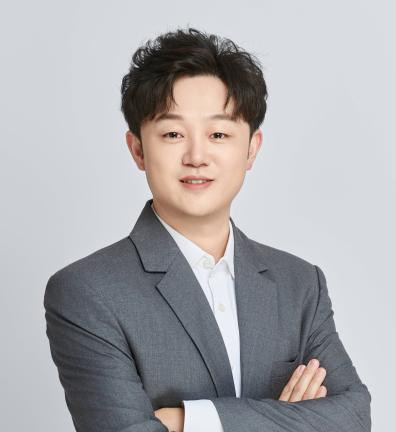
黄骐云
个人简介
黄骐云,男,人工智能与数字经济广东省实验室(广州) 研究员,国家海外高层次人才,入选广东省重大人才工程青年项目、广州市重大人才工程青年项目、广州市青年科技人才托举工程,主持国自然青年基金、广东省自然基金面上项目、广州市重点领域研究计划等,发表高水平学术论文30余篇,授权国家专利7项。
研究领域
研究方向聚焦脑机接口与脑/精神疾病交叉领域研究,围绕多模态信号融合分析、复杂系统集成控制、可穿戴人机交互等方向开展技术攻关,构造新型非侵入式脑机接口及脑信号解码算法,对相关精神疾病病理机制进行深入研究。近期重点关注方向包括运用脑机接口等人工智能技术,结合可解释孤独症神经病理假说,寻找客观量化的孤独症识别和分型生物标记,开发新型智能辅助诊断和评估方法,并探索在临床干预和药物转化试验等领域的应用。
教育经历
- 2016年9月-2019年12月,华南理工大学,自动化科学与工程学院,脑机接口与脑信息处理中心,模式识别与智能系统专业,博士
- 2013年9月-2015年7月,南加利福尼亚大学(美国),电子工程学院,硕士
- 2009年9月-2013年7月,北京航空航天大学,自动化科学与电气工程学院,学士
工作经历
- 2023年4月-至今,人工智能与数字经济广东省实验室(广州),琶洲实验室-脑机智能研究中心,研究员
- 2020年1月-2023年3月,伦敦大学国王学院(英国),精神病学、心理学和神经科学研究所,博士后副研究员
科研项目情况
- 国家优秀青年科学基金(海外)项目,2025-2028,主持
- 国家自然科学基金青年基金项目, 2025-2027,主持
- 广东省重大人才工程青年项目,2024,主持
- 广东省自然科学基金面上项目,2024-2026,主持
- 广州市重大人才工程青年项目,2024-2029,主持
- 广州市青年科技人才托举工程,2024-2026,主持
- 广州市重点领域研发计划项目,2024-2027,主要参与人(项目50万,本人20万)
- 人工智能与数字经济广东省实验室人才引进项目,2024-2027,主持
论文论著
- Q. Huang, A. Pereira, H. Velthuis, N. Wong, C. Ellis, F. Ponteduro, M. Dimitrov, L. Kowaleski, D. Lythgoe, D. Rotaru, R. Edden, A. Leonard, G. Ivin, J. Ahmad, C. Pretzsch, E. Daly, D. Murphy, and G. McAlonan, “GABAB receptor modulation of visual sensory processing in adults with and without Autism Spectrum Disorder,” Science Translational Medicine, vol. 14, no. 626, eabg7859, Jan. 2022. (Science子刊,中科院一区Top)
- Q. Huang*, H. Velthuis, A. Pereira, J. Ahmad, S. Cooke, C. Ellis, F. Ponteduro, N. Puts, M. Dimitrov, D. Batalle, N. Wong, L. Kowalewski, G. Ivin, E. Daly, D. Murphy, G. McAlonan, “Exploratory evidence for differences in GABAergic regulation of auditory processing in Autism Spectrum Disorder,” Translational Psychiatry, 13.1: 320, 2023. (中科院一区Top)
- Q. Huang, C. Ellis, S. Leo, H.Velthuis, A. Pereira, M. Dimitrov, F. Ponteduro, N. Wong, E. Daly, D. Murphy, O. Mahroo, G. McAlonan, “Retinal GABAergic alterations in adults with autism spectrum disorder”, Journal of Neuroscience, 44(14), March 2024, 10.1523/jneurosci.1218-23.2024. (中科院一区Top)
- Q. Huang, Y. Chen, Z. Zhang, S. He, R. Zhang, J. Liu, Y. Zhang, M. Shao, and Y. Li, “An EOG-based wheelchair robotic arm system for assisting patients with severe spinal cord injuries,” Journal of Neural Engineering, vol. 16, no. 2, p.026021, Feb. 2019. (中科院二区)
- Q. Huang, S. He, Z. Gu, N. Peng, K. Li, and Y. Li, “An EOG-based human-machine interface for wheelchair control,” IEEE Transactions on Biomedical Engineering, vol. 65, no. 9, pp. 2023-2032, Sep. 2018. (IEEE Trans,中科院二区)
- Q. Huang, Z. Zhang, T. Yu, S. He, and Y. Li, “An EEG-EOG-based hybrid brain-computer interface: Application on controlling an integrated wheelchair robotic arm system,” Frontiers in Neuroscience, vol. 22, no. 13, p. 1243, Nov. 2019. (中科院二区)
- X. Bao, X. Feng, H. Huang, M. Li, D. Chen, Z. Wang, J. Li, Q. Huang*, Y. Li. Day-night hyperarousal in tinnitus patients [J]. Sleep Medicine, 131: 106519, 2025. (中科院二区)
- Feng X, Bao X, Huang H, Q. Huang* et al. Frontal Gamma-alpha Ratio Reveals Neural Oscillatory Mechanism of Attention Shifting in Tinnitus[J]. iScience, 2025. (中科院二区)
- D. Chen, Z. Song, Y. Du, Y. Chen, X. Zhang, Y. Li, and Q. Huang*. “Aperiodic Component Analysis in Quantification of Steady-State Visually Evoked Potentials”. IEEE Transactions on Biomedical Engineering, 2024, DOI 10.1109/TBME.2024.3458060. (IEEE Trans,中科院二区)
- X. Bao, X. Feng, D. Chen, H. Huang, Q. Huang* and Y. Li, “Thalamocortical Dysrhythmia-related Sleep Spindle Desynchronization in Patients with Tinnitus”. Neurobiology of Disease, Accept, 2025 (中科院二区Top)
- Z. Lu, Y. Zhou, L. Hu, J. Zhu, S. Liu, Q. Huang and Y. Li, “A Wearable Human-Machine Interactive Instrument for Controlling a Wheelchair Robotic Arm System”. IEEE Transactions on Instrumentation and Measurement, 2024. (IEEE Trans,中科院二区)
- K. Li, W. Huang, W. Gao, Z. Guan, Q. Huang, J. Yu, and Y. Li. “An Electroencephalography-Based Brain-Computer Interface for Emotion Regulation with Virtual Reality Neurofeedback”. IEEE Transactions on Cognitive and Developmental Systems, 2024. (IEEE Trans,中科院二区)
- Y. Zhou, S. He, Q. Huang, and Y. Li, “A hybrid asynchronous brain-computer interface combining SSVEP and EOG signals,” IEEE Transactions on Biomedical Engineering, vol. 67, no. 10, pp. 2881-2892, Oct. 2020.(IEEE Trans,中科院二区)
- S. He, T. Yu, R. Zhang, Q. Huang, C. Lin, Z. Gu, Z. Yu, H. Tan and Y. Li, “EEG- and EOG-Based Asynchronous Hybrid BCI: A System Integrating a Speller, a Web Browser, an E-Mail Client, and a File Explorer,” in IEEE Transactions on Neural Systems and Rehabilitation Engineering, vol. 28, no. 2, pp. 519-530, Feb. 2019. (IEEE Trans,中科院二区)
- R. Zhang, S. He, X. Yang, X. Wang, K. Li, Q. Huang, Z. Yu, X. Zhang, D. Tang, and Y. Li, “An EOG-based human-machine interface to control a smart home environment for patients with severe spinal cord injuries,” IEEE Transactions on Biomedical Engineering, vol. 66, no. 1, pp. 89-100, Jan. 2019. (IEEE Trans,中科院二区)
- Y. Han, L. Du, Q. Huang, D. Cui, and Y. Li. “Enhancing specialization of attention-related EEG power and phase synchronism brain patterns by meditation”. Cerebral Cortex, 2024, 34(7). (中科院二区)
- Y. Li, S. He, Q. Huang, Z. Gu, and Z. Yu, “An EOG-based switch and its application for ‘start/stop’ control of a wheelchair,” Neurocomputing, vol. 275, no. 31, pp. 1350-1357, Jan. 2018. (中科院二区)
- Y. Jiang, Q. Huang, Y. Li. “Application Strategies of Brain-computer Interface in Education from the Perspective of Innovation Diffusion Theory”. Brain-Apparatus Communication: A Journal of Bacomics, 2024, 3(1): 2376368
- C. Zhang, X. Zhang, D. Chen, S. Chen, Q. Huang*. “Enhancing P300 Amplitudes Using Continuous Theta Burst Stimulation”, International Conference on Computer, Vision and Intelligent Technology (ICCVIT), 2024. (EI国际会议)
- J. Chen, X. Bao, Y. Ye, Q. Huang*. “Active Learning for High-Quality Sawtooth Wave Dataset Generation in Sleep Analysis”, The 6th International Conference on Frontier Technologies of Information and Computer (ICFTIC), 2024 (EI国际会议)
- Y. Du, Z. Guan, W. Huang, X. Zhang, and Q. Huang*, “A Case-based Channel Selection Method for EEG Emotion Recognition Using Interpretable Transformer,” International Conference on Computer, Vision and Intelligent Technology (ICCVIT), 2023. (EI国际会议)
- S. Chen, W. Hu, X. Zhang, and Q. Huang*, “Enhancing detection of SSVEP-based surround suppression using canonical correlation analysis,” International Conference on Computer, Vision and Intelligent Technology (ICCVIT), 2023. (EI国际会议)
- J. Zhu, X. Bao, Q. Huang, T. Wang, L. Huang, Y. Han, K. Li, D. Chen, K. Xu, Z. Wang, Y. Jiang, and Y. Li. “Motion Sickness Alleviation Based on a Mindfulness Brain-Computer Interface”, 16th International Conference on Advanced Computational Intelligence (ICACI). IEEE, 2024: 1-6. (EI国际会议)
- C. Ellis, J. Ahmad, A. Zoumpoulaki, M. Dimitrov, H. Velthuis, A. Pereira, N. Wong, F. Ponteduro, L. Kowalewski, A. Leonard, P. Garces, Q. Huang, E. Daly, D. Murphy, G. McAlonan, “The dynamically neurodiverse human brain: Measuring excitatoryinhibitory dynamics and identifying homeostatic differences in autistic and non-autistic people”, medRxiv, 2023: 2023.06. 19.23291507
- S. He, Q. Huang, and Y. Li, “Toward improved P300 speller performance in out-door environment using polarizer,” in Proc. 12th IEEE World Congress on Intelligent Control and Automation (WCICA), pp. 3172-3175, 2016. (EI国际会议)
- Q. Huang, C. Ellis, S. Leo, H.Velthuis, A. Pereira, M. Dimitrov, F. Ponteduro, N. Wong, E. Daly, D. Murphy, O. Mahroo, G. McAlonan, “Flash electroretinogram as a potential biomarker of GABAergic dysfunction in adults with autism spectrum disorder” [Conference presentation], The 60th Annual Symposium of the International Society for Clinical Electrophysiology of Vision, Kyoto, Japan, March 15th -18th , 2023. (EI国际会议)
- C. Ellis, J. Ahmad, A. Zoumpoulaki, H. Velthuis, A. Pereira, N. Wong, M. Dimitrov, F. Ponteduro, L. Kowalewski, A. Leonard, E. Mcgregor, P. Garces, Q. Huang, E. Daly, D. Murphy, G. McAlonan, “The aperiodic 1/f signal as a proxy marker of excitation- inhibition flux in the brain: evidence from individuals with and without autism”, in the Neuroscience 50th Annual Meeting 2021. (EI国际会议)
- C. Ellis*, Q. Huang*, H. Velthuis, A. Pereira, N. Wong, F. Ponteduro, M. Dimitrov, A. Leonard, L. Kowalewski, P. Garces, E. Daly, D. Murphy, J. Ahmad, G. McAlonan, “Identifying EEG markers of Excitation and Inhibition in the living human brain,” in the International Society for Autism Research (INSAR) Annual Conference 2022. (co-first author) (EI国际会议)
- 陆子霖,周亚军,黄骐云等.基于可穿戴式多模态人机接口的机械臂运动控制方法[J/OL].机器人:1-13. https://doi.org/10.13973/j.cnki.robot.230254. (中文核心)
获得荣誉
- “创青春”全国大学生创业大赛暨第十一届“挑战杯”大学生创业计划竞赛 全国金奖 第一完成人 2018
- 第四届中国“互联网+”大学生创新创业大赛广东省分赛 创意组金奖 第二完成人 2018
- 工信部“创客中国”大健康创新创业大赛 全国二等奖 第一完成人 2018
- 教育部博士研究生国家奖学金 2017
- 华南理工大学校长奖学金 2019
- 华南理工大学优秀博士创新基金资助 2018
- 中国电子学会“2017世界机器人大赛”-BCI脑控机器人大赛 一等奖 第二完成人 2017
- 华南理工大学宏平长青基金学生科技创新竞赛奖学金 2017
专利情况
- 基于眼电的轮椅控制系统,发明专利,华南理工大学,授权号: CN107007407B,ZL201710235251.1
- 一种基于眼电和机器视觉的轮椅机械臂集成系统及其控制方法,发明专利,华南理工大学,授权号: CN110840666B.ZL201911133337.9
- 一种基于手指开关的人机交互系统及其交互方法,发明专利,华南理工大学,授权号:CN109933270B,ZL201910297611.X
- 一种基于视觉刺激界面的表面肌电人机接口系统及其控制方法,发明专利,华南理工大学,授权号:CN110018744B,ZL201910306671.3
- 一种智能轮椅室内导航系统,实用新型专利,华南理工大学,授权号: CN207832203U,ZL201820059669.1
- 一种基于开关手指的人机交互系统,实用新型专利,华南理工大学,授权号:CN209281336U,ZL202020024917.6
- 一种基于手指姿态解算的人机交互系统,实用新型专利,华南理工大学,授权号:CN211698898U,ZL201920254110.9